
Sale!


Quaking Aspen Tree (Populus Tremuloides) – 3 Gallon Pot
Original price was: $89.97.$62.98Current price is: $62.98.
- Where quality meets convenience.
- Efficient and effective customer service, online.
- Protect Your Information, Shop with Safe Payments
- Made of environmentally friendly materials

Quaking Aspen Tree
Populus tremuloides
Other Names: Trembling Aspen, Golden Aspen, Mountain Aspen, Popple, Poplar, Trembling Poplar
Plant Details
USDA Plant Hardiness Zones: 1a-6b (warm-summer climates); 1a-8b (cool-summer climates) Find Your Zone
Plant Type: Deciduous Tree
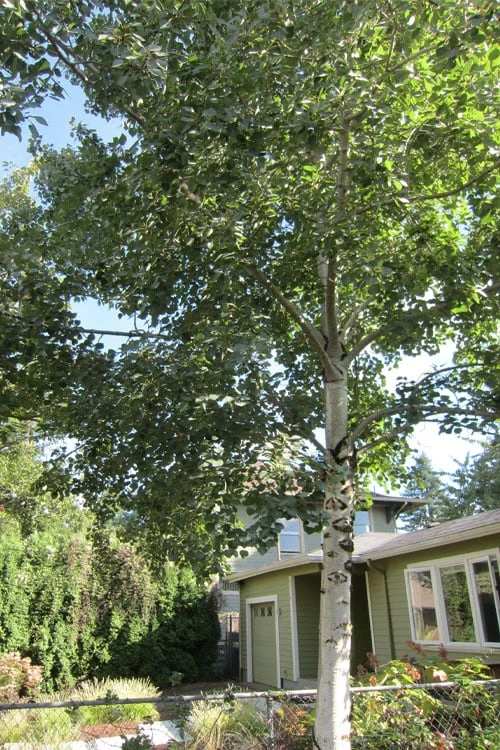
Height at Maturity: 20-50′
Width at Maturity: 10-30′
Spacing: 30′ for space between trees
Spacing: 30′ for space between trees
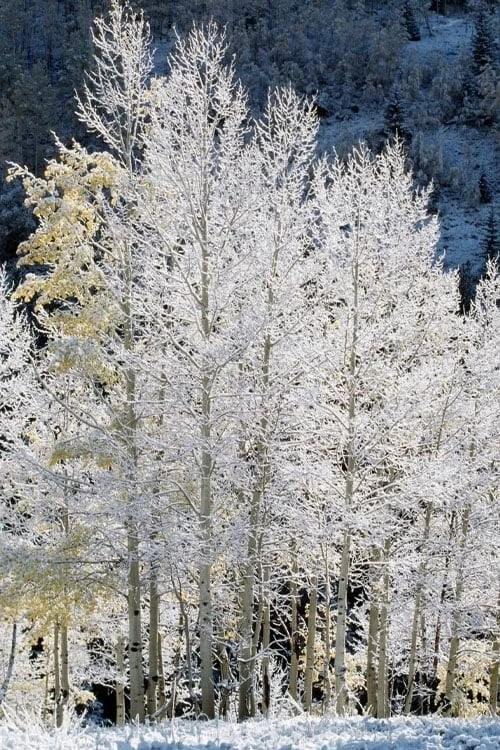
Growth Habit / Form: Upright, Narrow, Rounded to Pyramidal
Growth Rate: Fast! 2′ or more per year
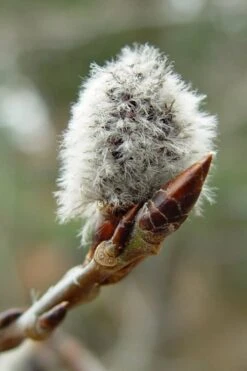
Flower Color: Grey catkins
Flowering Period: Spring
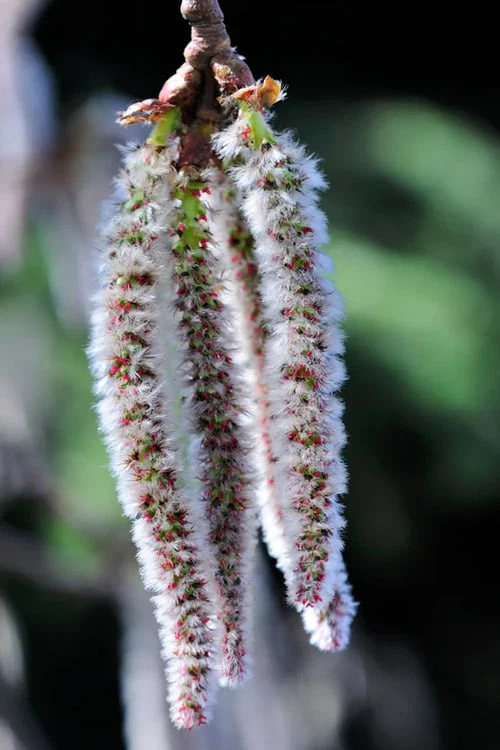
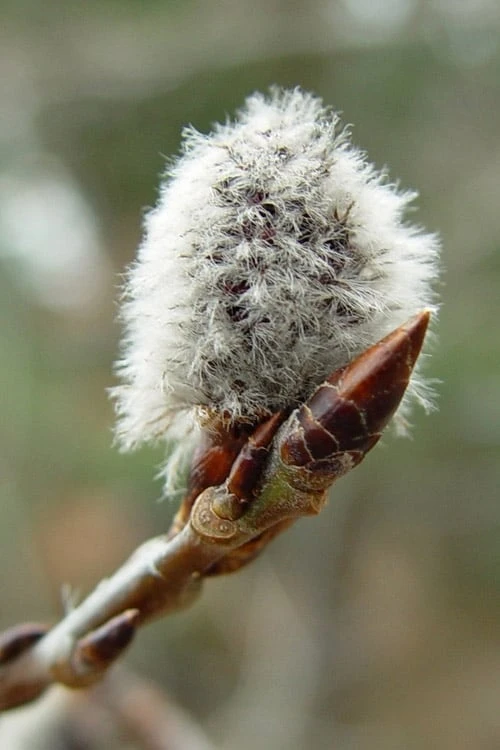
Flower Type: Catkin; short on males, long on females
Fragrant Flowers: No
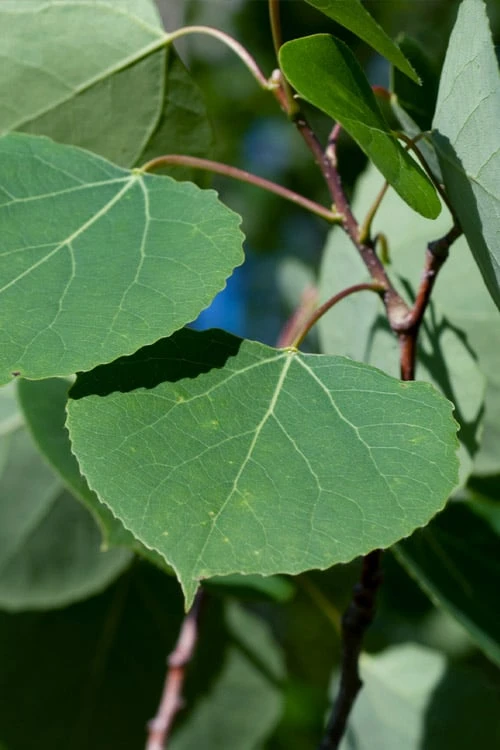
Foliage Color: Light Green maturing to Dark Green
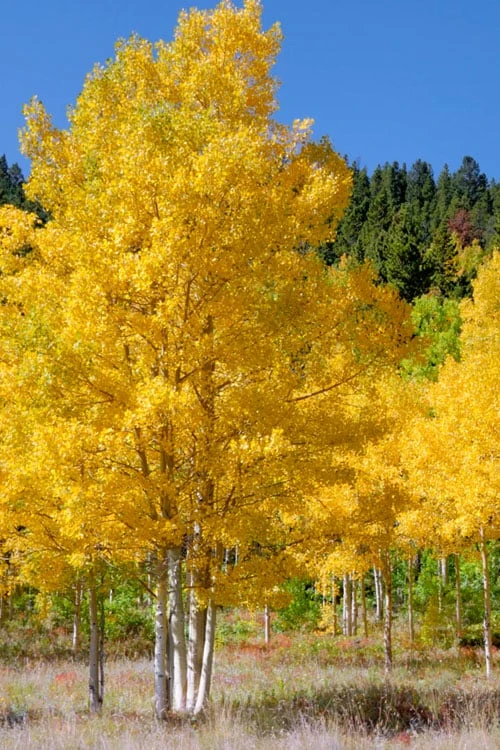
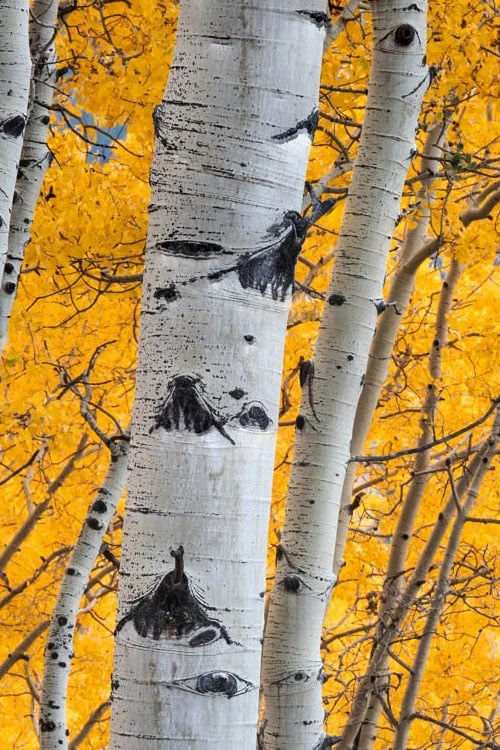
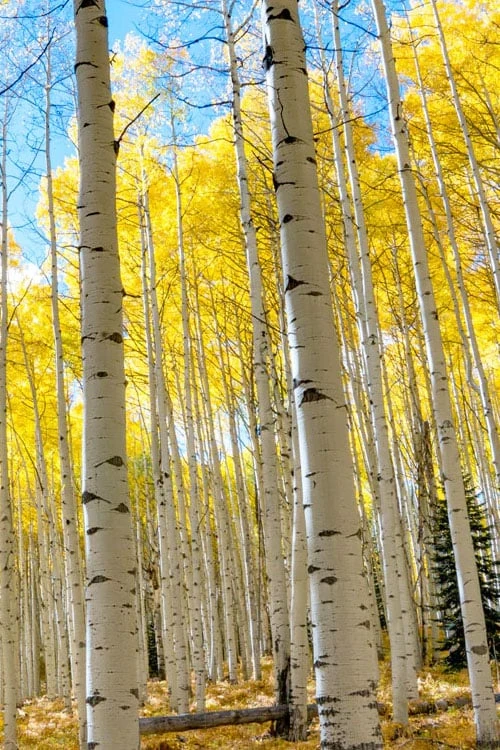
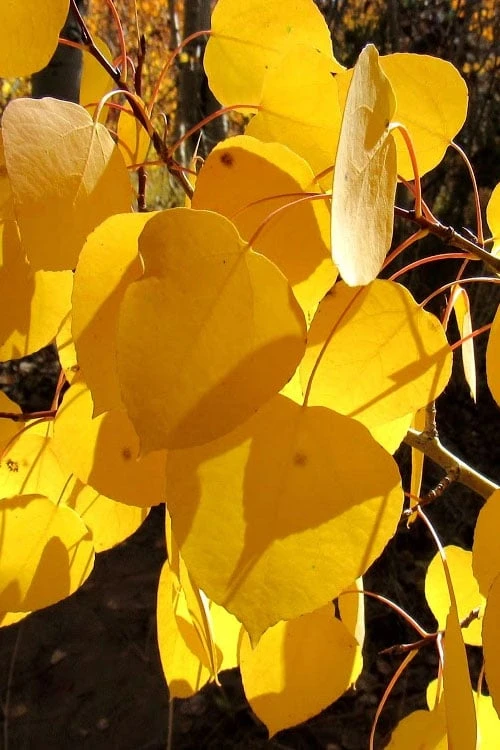
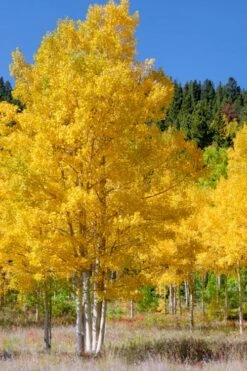
Fall Foliage Color: Bright Yellow
Fall Foliage Color: Bright Yellow
Fragrant Foliage: No
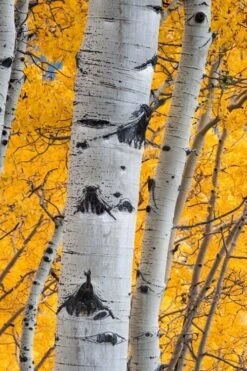
Bark Color: White to Grey or Grey Green shades
Sun Needs: Full Sun or Mostly Sun
Water Needs: Average
Soil Type: Clay (amend heavy clay to ensure good drainage), Loam, Sandy, Silt
Soil Drainage: Moist But Well Drained
Soil pH: 5.5 – 8.0
Maintenance / Care: Low
Attracts: Birds, Visual Attention
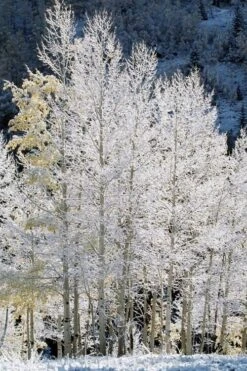
Resistances: Cold temperatures (-60F), Deer, Disease, Moderate Drought (when established)
Description
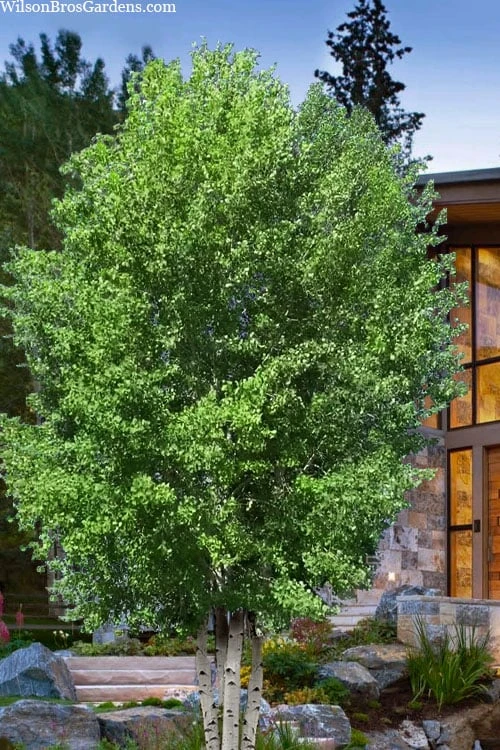
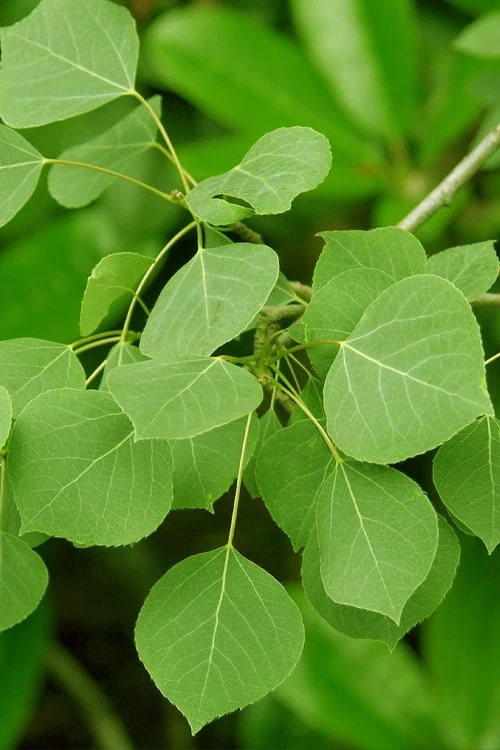
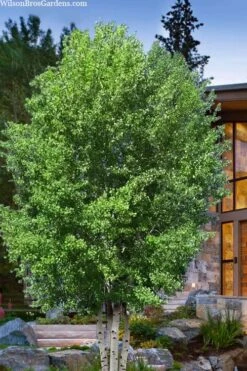
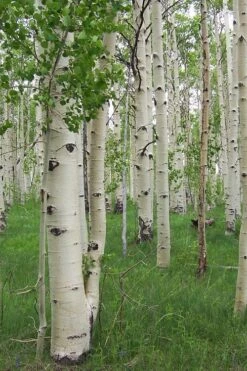
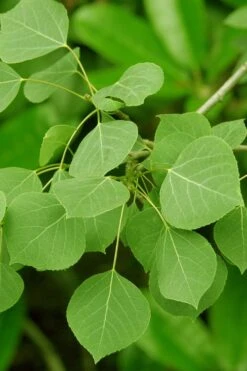
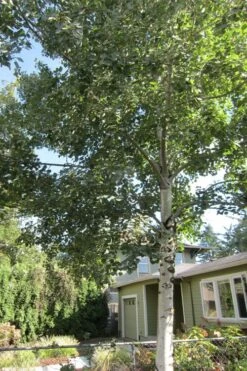
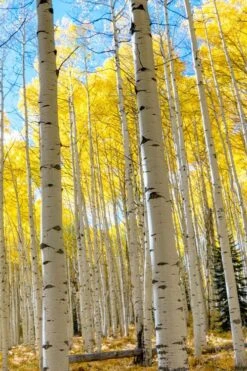
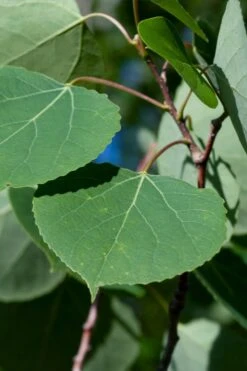
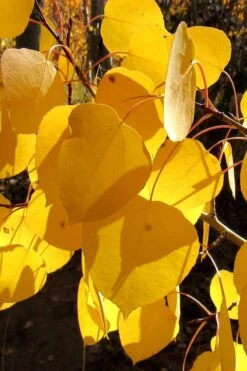
An easy-to-grow and fast growing tree that prefers cool-summer climates in Zones 1 to 8, Populus tremuloides, commonly called Quaking Aspen, is a North American native tree adored for its beautiful white bark and heart-shape leaves that “quake” in the slightest breeze, hence the name. On a breezy day you might hear this tree before you see it. The bark of young trees is smooth and greenish white becoming chalky white with contrasting black patching. The dark green leaves contrast beautifully with the bark throughout the warm season and also in fall when they turn to a beautiful brilliant yellow. Aspens are dioecious, which means the male and female flowers appear on separate trees in spring. The male catkins are similar in appearance to those on pussy willows. The female catkins hang down in dropping clusters up to 6 inches long. Quaking Aspen is a medium to large sized tree growing 20 to 50 feet tall with a narrow pyramidal crown to 10 to 30 feet wide depending on climate, soil type and moisture, and other conditions. With ample soil moisture and sunlight it will reach greater heights. A fine specimen in the landscape and truly spectacular in groupings or groves, which is how they are most often observed growing in the wild. Extremely cold hardy to -60F in Zones 1 to 6 and Zones 1 to 8 in cool-summer climates.
Landscape & Garden Uses
Growing 20 to 50 feet tall and 10 to 30 feet wide depending on climate and soil type and soil moisture, the Quaking Aspen tree is ideal for use as a specimen or in groupings or groves in landscape and sunny to partially shaded woodland borders. Quaking Aspen will tolerate dry periods but grows best in a consistently moist soil, which makes it a fine candidate for low-lying areas or next to lakes, streams, rivers or other bodies of water. A fine addition to native plant gardens, white gardens, alpine gardens and bird gardens.
Suggested Spacing: 30′ apart for space between trees
Growing Preferences
Thriving as far north as Zone 1 where temperatures can drop to 60F during winter and as far south as Zone 8 in cool-summer climates, the Quaking Aspen grows well in most any moist but well-drained soil of average to poor fertility. It prefers full to most sun and consistent moisture however will tolerate drought when established. We suggest at least 5 hours of direct sunlight per day. Maintenance is minimal. Pruning isn’t necessary. That said, if you want to expose the trunk(s) lower branches can be removed to desired height.
Note: Find helpful advice from our experts under the Planting & Care tab above on desktop computer monitors or below on mobile devices.
Plant Long & Prosper!
Meet The Wilson Brothers & Staff
Questions? Contact Us!
Be the first to review “Quaking Aspen Tree (Populus Tremuloides) – 3 Gallon Pot”
Related products
Sale!
Original price was: $149.97.$95.99Current price is: $95.99.
Sale!
Original price was: $43.97.$30.78Current price is: $30.78.
Sale!
Original price was: $38.85.$27.20Current price is: $27.20.
Sale!
Original price was: $89.97.$62.98Current price is: $62.98.
Sale!
Original price was: $149.97.$96.99Current price is: $96.99.
Sale!
Original price was: $59.97.$41.98Current price is: $41.98.
Sale!
Original price was: $99.97.$69.98Current price is: $69.98.
Sale!
Original price was: $37.97.$26.58Current price is: $26.58.
Reviews
There are no reviews yet.